
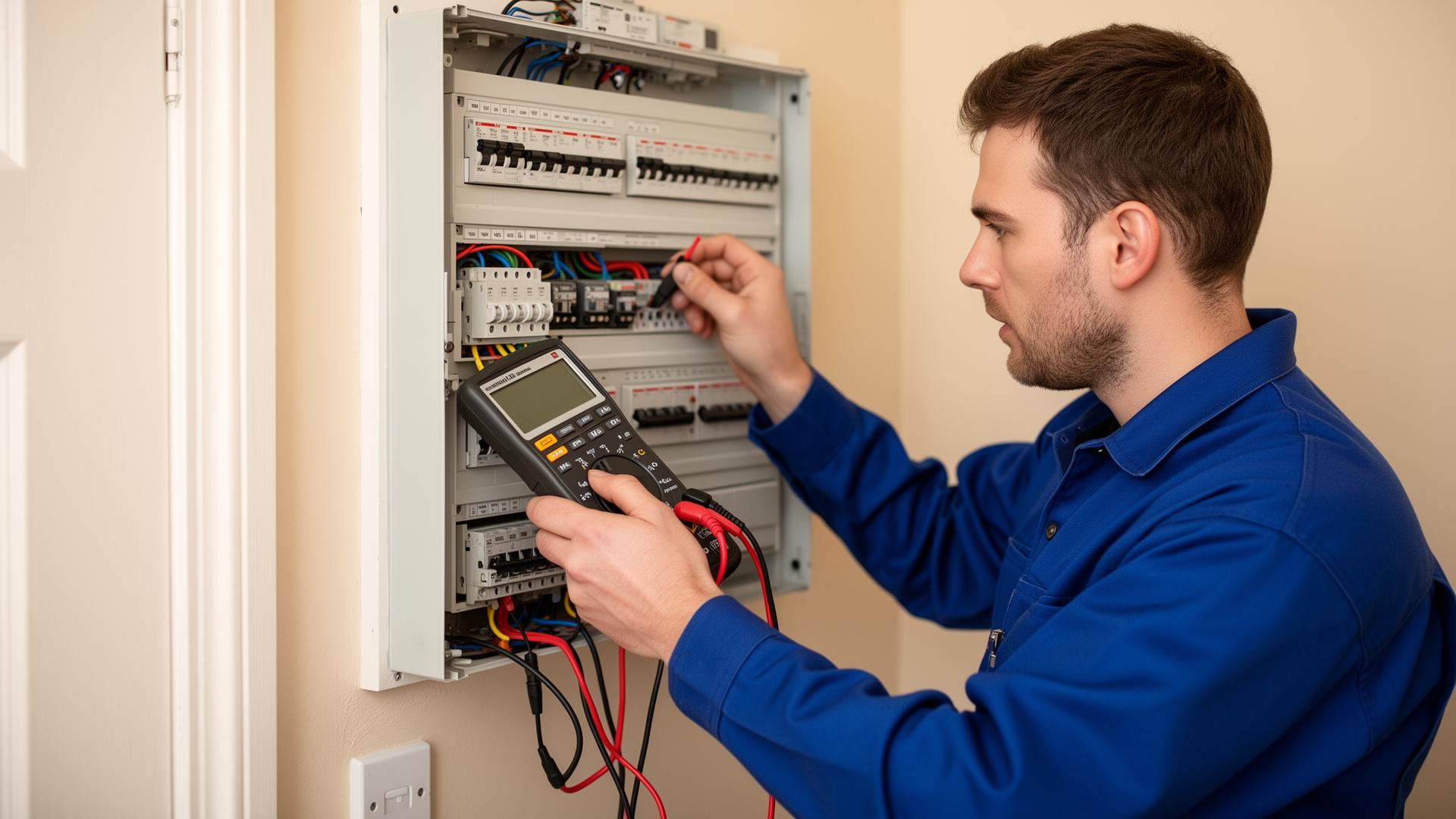
Electrical Fault FindingFind the Problem. Fix It Permanently.
When circuits trip, lights flicker, or sockets fail, guessing wastes time and money. Our systematic diagnostic approach identifies exact fault locations — so repairs are targeted, effective, and lasting.
Last updated: · Reviewed by Steve Green, NICEIC-approved electrician
Professional Fault Finding Services
Electrical faults rarely announce their location. A tripping RCD could be caused by problems anywhere on the protected circuits. Flickering lights might stem from loose connections, supply issues, or failing components. Identifying the actual cause requires systematic testing with professional equipment.
Common faults we diagnose and repair:
- Tripping RCDs and MCBs: Identifying which circuit and which point on the circuit is causing protection devices to trip
- Dead circuits: Locating breaks in cables, failed connections, or component failures
- Flickering lights: Diagnosing loose connections, supply issues, or incompatible dimming systems
- Intermittent faults: Finding problems that occur unpredictably through methodical testing and monitoring
- Overheating: Identifying poor connections or overloaded circuits using thermal imaging
- Earth faults: Locating insulation breakdown that creates shock and fire risks
Who needs fault finding services? Homeowners in Croydon, Bromley, Sutton, and across London experiencing electrical problems they can't explain. Landlords needing quick diagnosis of tenant-reported issues. Anyone frustrated by recurring problems that other electricians haven't resolved.
Why DIY Fault Finding Fails
When something electrical stops working, it's tempting to start checking things yourself. But without proper equipment and training, DIY diagnosis is ineffective and potentially dangerous.
Problems with amateur fault finding:
- Safety risks: Testing electrical systems without proper isolation procedures creates shock hazards. Some faults involve live conductors in unexpected places.
- Incomplete diagnosis: Basic multimeters don't perform the tests that reveal most faults. Insulation resistance, RCD operation, and loop impedance require specialist equipment.
- Treating symptoms not causes: Replacing a tripping MCB doesn't fix the fault causing it to trip. Without diagnosis, problems return or worsen.
- Unnecessary damage: Without systematic approach, you might lift floorboards, open junction boxes, and disturb working circuits — all to find a fault elsewhere.
- Wasted time: Hours of frustrating investigation that a professional diagnoses in minutes with proper equipment.
Professional diagnosis saves money: A fixed-price diagnostic call that identifies the exact problem costs less than multiple DIY repair attempts that don't fix the underlying fault.
Our Diagnostic Process
Systematic investigation using calibrated equipment — not guesswork. We find faults efficiently and fix them permanently.
Symptom Assessment
We discuss what's happening — when, where, and under what conditions. Your description provides crucial diagnostic clues.
Visual Inspection
We examine the consumer unit, affected circuits, accessories, and any visible wiring for obvious faults or damage.
Systematic Testing
Using professional diagnostic equipment, we test circuits methodically — insulation resistance, continuity, RCD function, and earth fault loop impedance.
Fault Identification
We locate the precise fault location — often behind walls, under floors, or in junction boxes. You receive a clear explanation.
Repair & Verify
We repair the fault, test the circuit thoroughly, and verify the installation is safe. Full documentation provided.
Why Professional Fault Finding
The right diagnosis saves time, money, and frustration. Professional testing finds what DIY methods miss.
Accurate Diagnosis
Guessing wastes time and money. Professional testing identifies exact fault locations and causes — no unnecessary exploratory work, no repeated call-outs.
Time Efficiency
Systematic testing finds faults faster than trial-and-error. What might take hours of DIY investigation, we diagnose in minutes with proper equipment.
Root Cause Resolution
We identify why the fault occurred, not just where. Understanding the cause prevents recurrence and identifies any related issues.
Safety Assurance
Some faults create immediate danger; others are warning signs. We identify risks you may not recognise and make installations safe.
Certified Work
All repairs are certified to BS 7671 standards. You receive documentation confirming your installation has been tested and is safe.
Professional Equipment
Insulation testers, RCD testers, thermal imaging, and loop impedance meters — the tools that make accurate diagnosis possible.
Common Electrical Faults Explained
RCD Tripping
RCDs trip when they detect current leaking to earth — indicating insulation failure, moisture ingress, or faulty appliances. We test each circuit to identify which one trips the RCD, then narrow down to the specific fault location. Common causes include failed appliances, damaged cables, and moisture in outdoor circuits.
MCB Tripping
MCBs trip on overload or short circuit. Repeated tripping suggests either too much load on the circuit or a fault causing excessive current. We measure circuit loads and test for short circuits to identify the cause.
Dead Sockets or Lights
Complete failure of sockets or lights usually indicates cable damage, failed connections, or component failures. We trace circuits using tone generators and test equipment to locate the break point.
Flickering Lights
Flickering has many causes: loose connections in fixtures or switches, supply voltage variations, incompatible dimmers with LED bulbs, or failing components. We diagnose systematically, starting with the most likely causes.
Intermittent Faults
The most frustrating faults only occur sometimes. Temperature, vibration, or load conditions may trigger them. We use extended testing, thermal imaging, and load simulation to reproduce and identify intermittent problems.
Hot Sockets or Switches
Heat indicates poor connections or overloading. Left unchecked, this causes fires. We identify whether the problem is a loose terminal, inadequate cable size, or excessive load — and repair accordingly.
Fault Finding FAQs
Answers to the most common questions about electrical fault diagnosis.
Signs You Need a Fault-Finding Specialist
If you've already had one electrician 'have a look' without solving it, you need someone with proper test equipment and a methodical approach.
Most repeat call-outs happen because the original electrician guessed instead of testing. A proper diagnostic visit usually costs less than two guess-and-replace visits combined.
- An RCD or breaker keeps tripping with no obvious cause
- Lights or sockets work intermittently — fine sometimes, dead other times
- You can hear buzzing or humming from a wall, ceiling or fuse box
- You've experienced mild shocks from taps, appliances or radiators
- Lights dim noticeably when an appliance switches on
- An electrician has already 'replaced things' and the fault has come back
- An EICR returned a 'further investigation required' (FI) code
- Your supply seems to drop voltage at peak times in the evening
Fault Finding & Diagnostics Pricing
Hourly diagnostic rates with a clear cap. You always know the maximum before we start.
| Job Type | Typical Price | What's Included |
|---|---|---|
| Standard diagnostic visit (Mon–Fri, 9am–5pm) | £100–£140 | Fixed-price diagnostic — initial assessment, isolation testing, written summary of findings. |
| Out-of-hours diagnostic (6pm–6am, weekends) | £210–£290 | Priority dispatch, payable upfront before attendance. |
| Extended diagnostic (1–3 hours) | £185–£320 | Full insulation resistance, loop impedance and circuit-by-circuit testing. |
| Intermittent fault investigation (data-logger) | £220–£420 | Up to 7 days of supply monitoring to catch faults that don't show on the day. |
| RCD nuisance-trip diagnosis | £120–£220 | Identifies which appliance or circuit is causing repeated trips. |
| Repair work following diagnosis | Quoted on day | You see and approve repair costs before any further work. |
Prices shown are typical guide ranges for Greater London and the South East as of 2026. Every job is quoted in writing on a fixed-price basis after a free site assessment — you only pay the figure we agree, with no hidden extras.
Worried About Paying for 'Just a Look'?
We hear this every week. Here's how we make sure you get value from a diagnostic visit.
"What if you can't find the fault?"
We commit to a written outcome on every visit — even if that outcome is 'fault is intermittent, install logger for 7 days'. You always leave with a documented next step, not a shrug.
"How is this different from any other electrician?"
We bring calibrated test gear: insulation resistance tester, loop impedance tester, clamp meter, thermal camera and data-logger. Most general electricians carry a multimeter and guess.
"Will you keep finding 'extra problems' once you start?"
Anything we find outside the original brief is logged separately and only quoted at your request. You decide whether to act on it now, later or never.
"Can you actually fix it on the same visit?"
In around 70% of cases, yes. Our vans carry common parts. Where we can't, you get a fixed quote for the return visit and your diagnostic fee is partially credited against it.
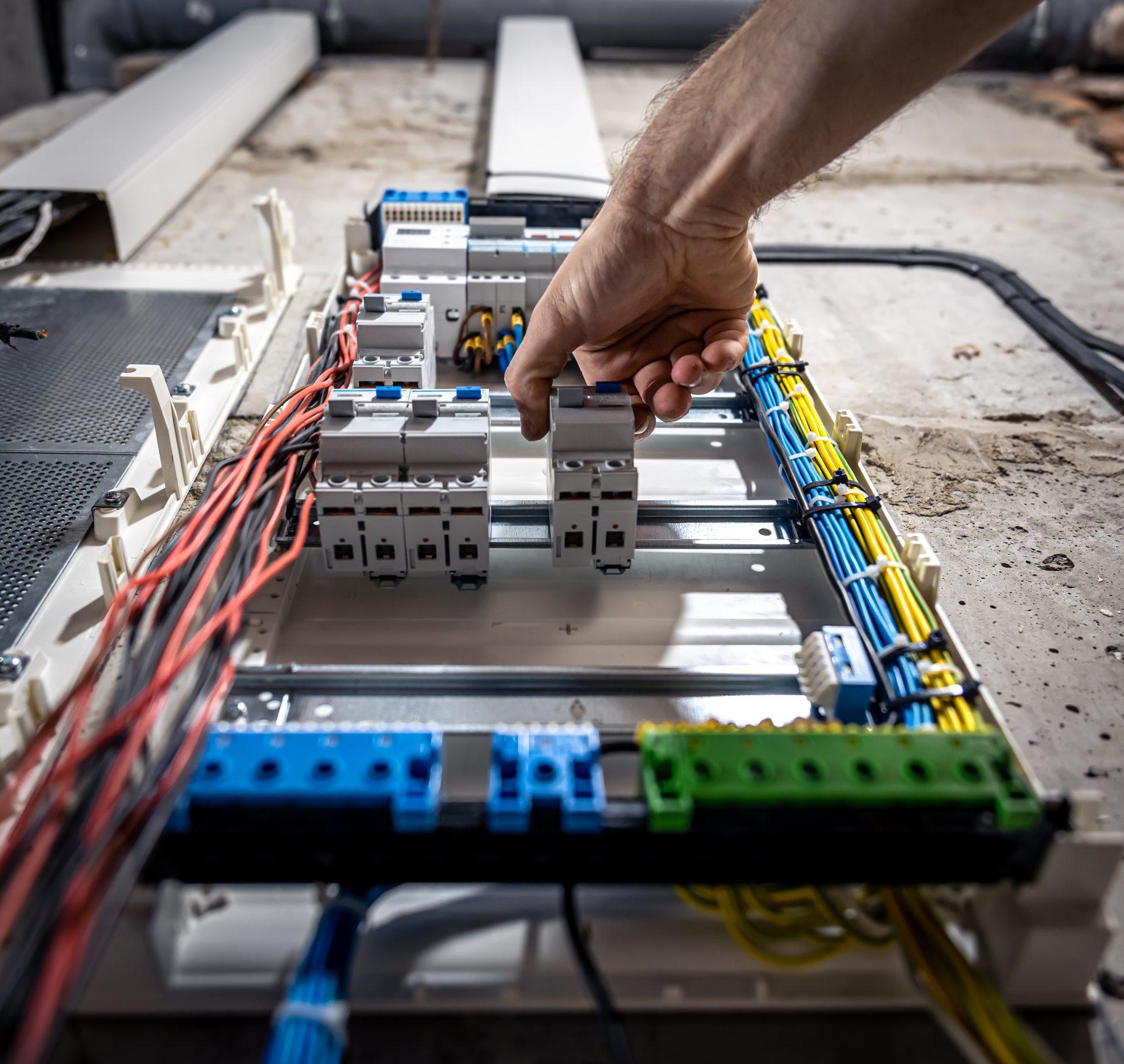
Stop Living With an Electrical Fault You Can't Pin Down
Intermittent faults get worse, never better. Book a proper diagnostic visit this week and get a written explanation — not another guess.
NICEIC approved · 25+ years' experience · 12-month workmanship guarantee